
Introduction
Reliable power forms the backbone of modern living, making electrical installation one of the most critical services in any residential, commercial, or industrial environment. Proper installation ensures that electricity flows safely and efficiently to every socket, appliance, and system within a building. Without a well-planned setup, even the most advanced property can face constant disruptions, safety hazards, and costly repairs.
Professional electrical installation goes far beyond simply connecting wires. Skilled electricians design systems that balance load distribution, future expansion, and strict safety compliance. From homes and offices to shopping centers and factories, every space depends on a structured electrical network that supports daily operations. Companies like intelmark.co specialize in delivering dependable solutions tailored to each project’s size, purpose, and energy demand.
Types of Electrical Installation
Residential Electrical Installation
Comfort and safety inside homes depend heavily on well-executed residential electrical systems. Proper wiring supports lighting, air conditioning, kitchen appliances, and smart home devices without overloading circuits. Apartments and villas require carefully planned switchboards, circuit breakers, and distribution lines to ensure stable performance throughout the property.
Modern homes also demand energy-efficient lighting systems, surge protection, and backup power solutions. Skilled technicians make sure every switch, socket, and fixture is placed strategically for convenience and safety. A professionally installed residential system reduces the risk of electrical faults while increasing property value and long-term reliability.
Commercial Electrical Installation
Business environments have more complex electrical needs compared to residential spaces. Offices, retail stores, restaurants, and warehouses rely on structured power systems that can handle heavier loads and extended operational hours. Proper planning ensures uninterrupted performance for lighting, HVAC systems, IT infrastructure, and security equipment.
Compliance with commercial safety standards is essential in such settings. Faulty wiring or poor load management can lead to downtime, equipment damage, or serious safety risks. Professional service providers like intelmark.co ensure that commercial installations meet regulatory requirements while supporting business productivity and future scalability.
Industrial Electrical Installation
Large-scale facilities such as factories and manufacturing plants require industrial-grade electrical installations. High-voltage systems, heavy machinery connections, and automated production lines demand specialized expertise and durable materials. These environments must maintain stable power distribution even under extreme operational conditions.
Industrial installations also involve advanced control panels, motor connections, and safety mechanisms to prevent overloads or short circuits. Precision and planning are crucial, as even a minor electrical fault can halt production and lead to significant financial losses. Professional contractors ensure these systems operate efficiently while meeting strict safety protocols.
Key Components of an Electrical Installation System
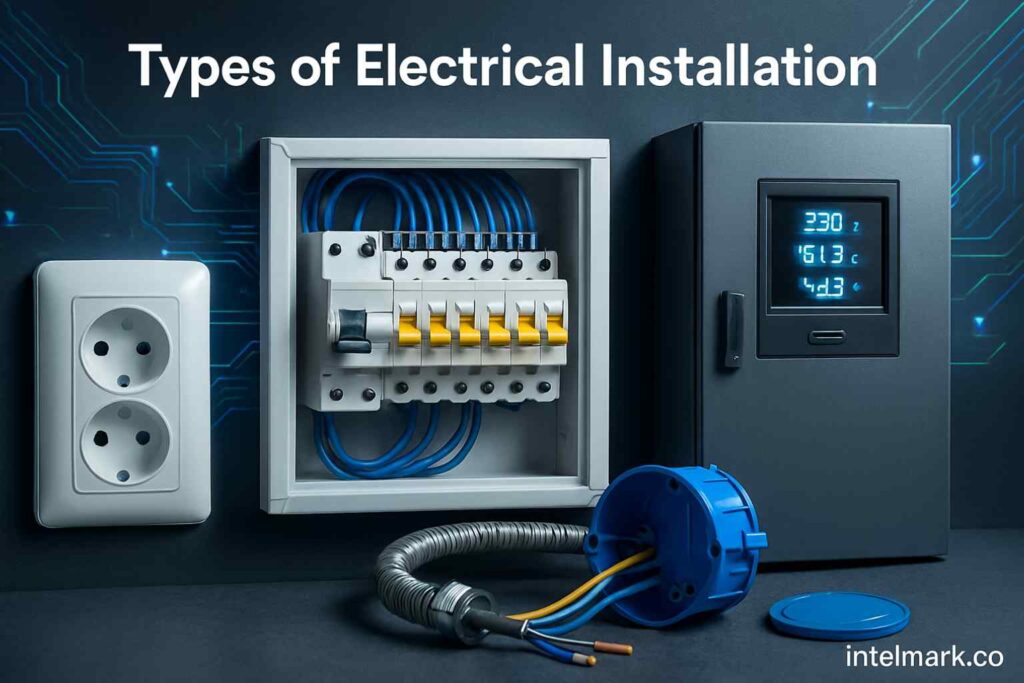
Every effective electrical installation consists of several essential components working together as a unified system. Electrical wiring and cabling form the foundation, allowing power to travel from the main supply to different parts of the building. High-quality cables reduce resistance, heat buildup, and the risk of electrical failure over time.
Distribution boards act as control centers, directing electricity safely through circuit breakers that prevent overloads and short circuits. Sockets, switches, and lighting fixtures provide user access while ensuring safe operation of devices and appliances. Proper earthing or grounding systems add another layer of protection, guiding excess current safely into the ground and reducing the risk of electric shock or fire hazards.
| Component | Purpose | Importance |
|---|---|---|
| Electrical Wiring | Transfers electricity across the building | Ensures stable and efficient power flow |
| Distribution Board | Controls and distributes circuits | Prevents overloads and short circuits |
| Switches & Sockets | User access points for electricity | Provides safe and convenient usage |
| Lighting Fixtures | Illumination systems | Supports comfort and productivity |
| Earthing System | Directs fault current to the ground | Protects people and equipment |
Step-by-Step Electrical Installation Process
Successful electrical installation follows a structured and carefully monitored process. The first phase involves a detailed site inspection and load assessment, allowing engineers to understand the building’s requirements and future energy demands. Accurate planning at this stage prevents costly changes later and ensures the system can handle expected loads safely.
Design and layout planning comes next, where cable routes, panel locations, and power distribution points are mapped out. Electricians then proceed with conduit and wiring installation, ensuring cables remain protected and organized. After that, switches, sockets, and distribution panels are fitted according to the approved layout. Thorough testing and safety checks conclude the process, confirming that every circuit functions correctly and meets regulatory standards.
Importance of Electrical Safety Standards
Electrical safety standards exist to protect lives, property, and equipment. Poor installation practices can result in electrical fires, short circuits, or permanent damage to appliances and machinery. Strict adherence to safety regulations ensures systems operate reliably without posing hidden risks to occupants.
Licensed electricians understand local codes and industry guidelines, which cover everything from wire sizing to grounding requirements. Professional companies such as intelmark.co follow these standards meticulously, ensuring every project meets compliance and passes inspections. This approach not only enhances safety but also provides long-term peace of mind for property owners.
Common Electrical Installation Mistakes to Avoid
Several common errors can compromise an electrical system’s performance and safety. Overloading circuits remains one of the most frequent issues, often caused by poor planning or underestimating future energy needs. Low-quality wiring materials may reduce initial costs but typically lead to overheating, frequent failures, and expensive repairs later.
Incorrect grounding also poses serious hazards, as it prevents fault currents from dissipating safely. Attempting do-it-yourself installations without professional knowledge further increases risks, potentially violating local regulations. Working with experienced specialists ensures these mistakes are avoided and systems are built to last.
Cost Factors in Electrical Installation
Electrical installation costs vary depending on several important factors. Property size plays a major role, as larger spaces require more materials, extended labor hours, and additional distribution points. The quality of materials selected, including cables, panels, and fixtures, also impacts the overall budget and long-term performance.
Labor expertise contributes significantly to pricing, especially for complex systems involving automation or high-voltage components. Projects with specialized requirements or challenging layouts may require additional planning and safety measures. Choosing a reputable service provider ensures that costs reflect quality workmanship and durable results rather than temporary fixes.
When to Upgrade or Replace Your Electrical Installation
Older properties often show signs that their electrical systems need upgrading. Frequent circuit breaker trips, flickering lights, or overheating outlets indicate that the system may no longer handle modern power demands. Outdated wiring can deteriorate over time, increasing the risk of electrical faults or fire hazards.
Renovations and building expansions also require reassessment of the existing setup. Adding new appliances, equipment, or office workstations increases electrical load, making an upgrade essential for safe performance. Professional evaluation helps determine whether a partial upgrade or full replacement is the best long-term solution.
Choosing the Right Electrical Installation Service Provider
Selecting a qualified contractor is just as important as choosing the right materials. Experience and industry certifications demonstrate a provider’s ability to handle diverse projects safely and efficiently. A strong portfolio of completed installations offers insight into their expertise across residential, commercial, and industrial sectors.
Compliance with safety regulations and positive customer feedback further indicate reliability and professionalism. Trusted providers like intelmark.co combine technical knowledge with modern tools and best practices, ensuring every installation meets high performance and safety standards. Working with the right team guarantees long-lasting results and dependable electrical systems.
Also Read: Apartment Painting Services with Premium Finish 2026
Conclusion
Reliable electrical installation forms the foundation of safe, efficient, and future-ready buildings. From homes and offices to large industrial facilities, every environment depends on properly designed and professionally installed electrical systems. Quality workmanship reduces risks, prevents costly downtime, and ensures smooth daily operations.
Choosing experienced professionals such as intelmark.co provides confidence that every component, connection, and safety measure is handled with precision. Well-planned electrical infrastructure supports long-term growth, energy efficiency, and peace of mind for property owners and businesses alike.
FAQ About Electrical Installation
Q1: How much do electricians charge per hour in Dubai?
Ans: Electricians in Dubai typically charge hourly rates based on experience, job complexity, and urgency, with licensed professionals ensuring safe and compliant work.
Q2: How much is an electrical installation?
Ans: The cost of an electrical installation depends on property size, materials, load requirements, and safety standards set by UAE regulations.
Q3: What is the salary of electrical engineer in UAE?
Ans: Electrical engineer salaries in the UAE vary by experience and industry, with higher pay for certified professionals in construction, energy, and infrastructure sectors.
Q4: How much does it cost to install electrical wiring in a room?
Ans: Installing electrical wiring in a room depends on room size, cable quality, labor charges, and compliance with local electrical safety codes.